
A population of 102.3 million and a labour force of 53.8 million — with only 38.6% living in urban areas, most of the market is still being formed.
Vietnam grew 8.02% in 2025 — among the fastest rates in Southeast Asia — and the National Assembly has targeted 10% or higher for 2026.
Approximately 84% internet penetration, with Facebook, Zalo and TikTok each reaching more than 76 million Vietnamese users.
Foreign investment registered in 2025, of which US$27.62 billion was actually disbursed (+9%), and US$9.8 billion went into manufacturing.
Vietnam's strategic difference is trajectory. Per-capita income rose 9.3% year on year in 2025 to about VND 5.9 million a month, and average per-capita GDP of roughly USD 5,026 is officially projected to reach USD 5,400 to 5,500 in 2026. Life expectancy is 74.7 years — a developed-market health profile at an emerging-market cost base.
Because only 38.6% of Vietnamese live in urban areas, the consumption boom is still concentrated in Hanoi, Ho Chi Minh City, Da Nang and Binh Duong — which is precisely why the mass-market layer matters: Vietnamese-language selling, local platforms and province-level distribution are what unlock the other 61%. Domestically, Zalo is the default messaging and commerce channel, TikTok has overtaken Lazada in marketplace share, and the internet economy grew about 16% year on year to roughly USD 36 billion in 2024.

A deliberate policy stack — tax law, trade agreements and a national technology push — has turned Vietnam into the primary beneficiary of supply-chain diversification.
Samsung alone has invested a cumulative USD 24 billion across six plants and drives about USD 57.1 billion of Vietnamese exports. Computers and electronics exports reached USD 107.75 billion in 2025, up 48.4%, becoming the country's top export category.
Vietnam is party to, or negotiating, roughly 17 free trade agreements — published counts range from 16 to 18 depending on pending deals — including the EU–Vietnam FTA, which removes almost 99% of tariffs on goods over time, and CPTPP, projected to lift Vietnamese GDP by around 1.3 percentage points by 2035.
The 2025 Corporate Income Tax Law (effective 1 October 2025) keeps the standard rate at 20% while offering 10% for 15 years or 17% for 10 years, four-year exemptions plus nine-year 50% reductions, and named incentives for semiconductor production and testing. Resolution 57-NQ/TW targets technology-led sectors at 30% or more of GDP by 2030.
The Law on Investment 143/2025/QH15 (from 1 March 2026) allows companies to register first and obtain the investment registration certificate within 12 months, while Decree 342/2026/NĐ-CP (from 18 October 2026) removes the old financial-capacity and job-creation tests for trade licences. Foreign-exchange reserves stood at USD 87.6 billion.
Vietnam is reconnecting its long, narrow economy at speed — a new international airport, a completed north–south expressway spine, and metro lines finally running in Ho Chi Minh City.
A VND 109,112 billion (~USD 4.7 billion) greenfield airport for Dong Nai, built for 25 million passengers and 1.2 million tonnes of cargo a year. Phase 1 was about 76% complete in May 2026, with commercial launch now targeted for late 2026 — the original 'by 2025' deadline was missed.
Vietnam passed its 3,000 km expressway target ahead of schedule, with about 3,345 km of mainline in operation by the end of 2025 — the backbone that finally links the Hai Phong and Ho Chi Minh City port systems by road.
Line 1 opened on 22 December 2024 after an 18-year build (VND 43,757 billion) and carried 20.56 million riders in its first full year; Line 2 (VND 55,179 billion) broke ground on 15 January 2026.
Congress approved a 1,541 km, ~USD 67.6 billion high-speed line on 30 November 2024. It is a policy decision, not a construction site: the start is targeted by end-2027 with completion around 2035, so treat it as a medium-term planning variable.
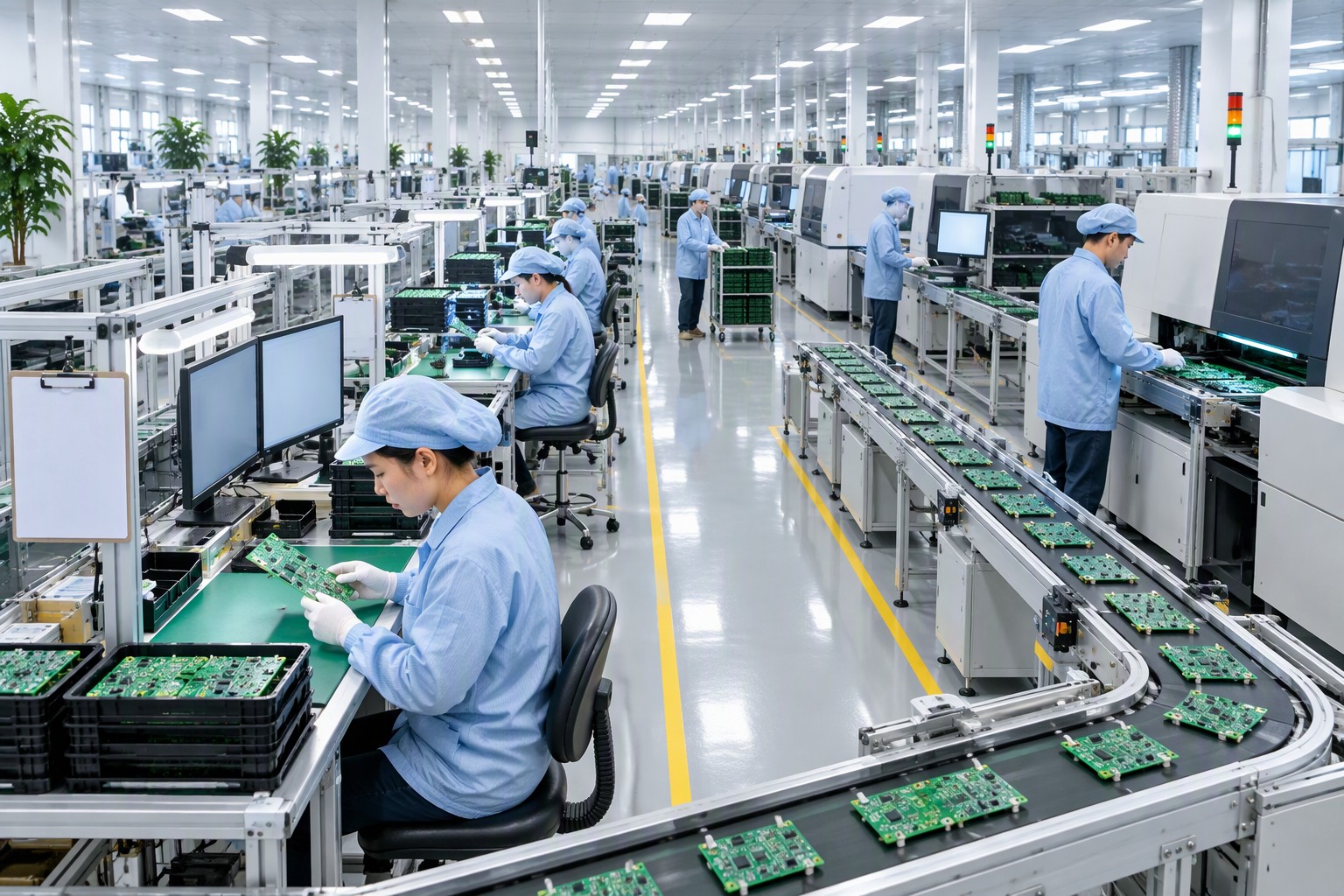
Vietnam exported USD 475.04 billion of goods in 2025 and is now a genuine digital infrastructure destination as well: a G42-Microsoft consortium is putting roughly USD 2 billion into Ho Chi Minh City data centres, Viettel began a 140MW campus in May 2025, and CMC invested USD 250 million. Local IT services revenue is climbing at about 10.8% a year with a developer pool past 500,000.
That makes Vietnam a complement to Batam rather than a rival for most foreign buyers: Vietnamese partners are strong at offshore technical delivery, while the licensing, Vietnamese-language labelling and distribution walls documented above still require an in-country commercial agent and a managed operations team — which is exactly what Abadi Guru provides from Batam.
By choosing our BPO operations or appointing us as your commercial marketing agent, you test and sell into Vietnam with zero Vietnamese entity registration, zero employment liability, and Vietnamese-language commercial coverage through local partners.
Under Decree 37/2026/NĐ-CP (effective from January 2026, replacing Decrees 43/2017 and 111/2021), mandatory product label information must be in Vietnamese, with a minimum 0.9mm font size. English-only packaging and marketing collateral is not lawfully sellable.
Foreign firms may only distribute goods directly with an investment licence that expressly permits direct distribution; otherwise they must sell through a licensed local agent. Representative offices are strictly prohibited from earning revenue, and full trading licences take months to obtain.
Employers carry roughly 23.5% in statutory contributions (17.5% social insurance, 3% health, 1% unemployment) plus a 2% trade-union fee payable to the VGCL whether or not a grassroots union exists. Region I's minimum wage rose to VND 5,310,000 a month on 1 January 2026, and severance runs at half a month's salary per year of service.
Compare the bureaucratic path of a foreign-owned enterprise in Vietnam against our agile on-the-ground operational model.
| Evaluation Metric | 100% Foreign-Owned LLC (IRC + ERC) | Abadi Guru Appointed Agent & BPO |
|---|---|---|
| Capital to Commit | No statutory minimum, but capital must be paid in within 90 days of the ERC through a DICA capital account | USD $0 (zero capital escrow required) |
| Time to First Invoice | 3 to 5 weeks for investment and enterprise registration, then bank, tax and e-invoice setup | 7 to 14 days plug-and-play launch |
| Right to Sell Directly | Direct goods distribution needs a separate investment licence; without it you must appoint a local agent anyway | We already act as your on-the-ground commercial agent and closer |
| Tax If You Sell Cross-Border | Entity pays standard 20% CIT; VAT 10% (8% reduced rate until 31 December 2026) | Foreign Contractor Tax on cross-border services: 5% VAT + 5% CIT on gross, reducible under an applicable tax treaty absent a permanent establishment. |
| HR & Severance Exposure | Roughly 23.5% employer contributions plus a 2% union levy, and half a month's severance per year served | 100% managed by Abadi Guru under SLA contracts |
| Customer Acquisition & Sales | Must recruit, train and manage unproven local sales reps | We find, prospect, negotiate, and close Vietnamese customers for you |